First-Year Student Resources

The College offers academic programs that encompass the full scope of human endeavor — humanities, arts, mathematics, the natural sciences, and the social sciences — with an emphasis on critical thinking.
Start with what excites you. Select an area of interest below to hear stories from students, alumni, and faculty, and learn about interesting courses, extracurricular activities, internships, and career paths.
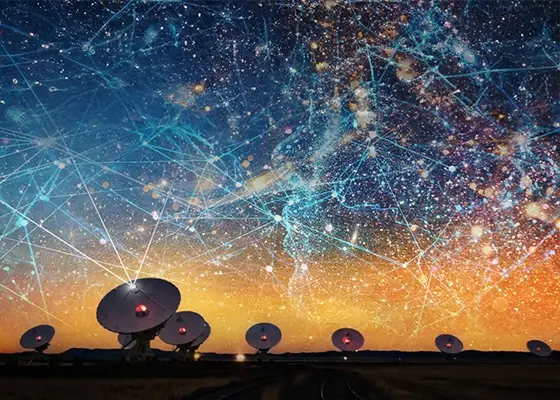
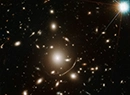
The new institute will develop innovative, trustworthy AI tools for astronomy, which will be used to pursue breakthrough discoveries by analyzing large astronomy datasets, transform physics-based simulations and more.
On Aug. 21, 2022, a NASA-funded Northwestern University team of astrophysicists launched its “Micro-X” rocket. The rocket spent 15 minutes in space — just enough time to snap a quick image of supernova remnant Cassiopeia A, a star in the Cassiopeia constellation that exploded approximately 11,000 light-years away from Earth.
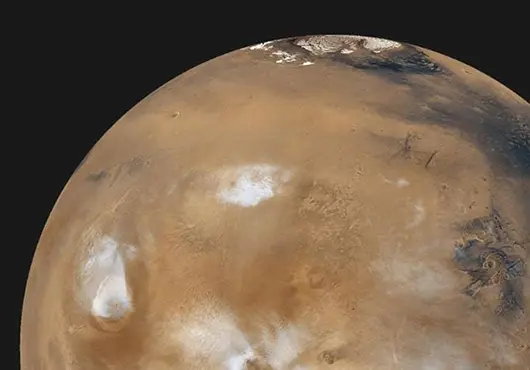
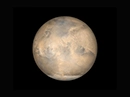
Since discovering Mars' cold, lifeless surface, scientists have sought ways to make it more habitable. In a groundbreaking study, researchers from Northwestern propose using engineered dust particles to warm Mars by over 50°F—bringing temperatures closer to supporting microbial life.
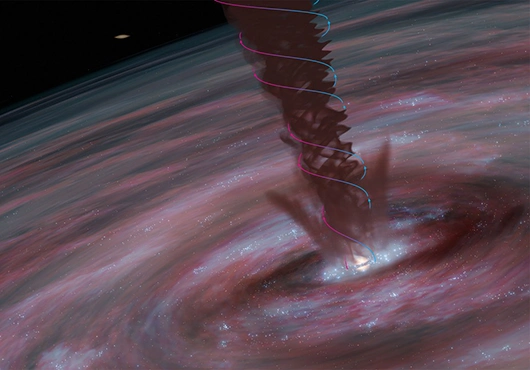
By studying a nearby galaxy, Northwestern University-led team of astronomers has discovered extremely powerful rotating, magnetic winds help the galaxy’s central supermassive black hole grow. The process is similar to the birth of new stars and planets, which are fed by swirls of gas and dust.
Astrophysicist Jason Wang of Northwestern University has unveiled a new time-lapse video of the HR8799 planetary system. The first extrasolar planetary system to be directly imaged in 2008, HR8799 boasts four Jupiter-sized planets that orbit its star.

Neurobiologist Thomas Bozza and his team at Weinberg College have mapped — for the first time — a complete pathway from gut microbiome to social behavior through the sense of smell.
This course focuses on the invisible universe at radio wavelengths for non-science and science majors. Radio night sky and the solar system planets look very different than the visible night sky and planets. Studying the invisible universe provides an awe in the diversity of phenomena that our universe offers. The realm of the invisible includes the components of the fascinating history of radio astronomy, and numerous discoveries over the last 90 years (e.g., pulsars, quasars, the Big Bang background radiation, organic molecules) and fundamental differences between radio and optical telescopes.
This course presents the modern scientific perspective on the question of life elsewhere in the universe, including the prospects for life on Mars, the discovery of extrasolar planets, and the search for extrasolar biospheres.
This course provides an introduction to modern cosmology, the science of the origin and evolution of the universe. We will cover the standard Big Bang model, including: calculations in an expanding universe, the thermal history of the universe, Big Bang nucleosynthesis, the cosmic microwave background, and cosmic inflation.